I remember standing in my shop at five in the morning, the air thick with the scent of yeast and the heat from the wood-fired oven, watching a customer pull a plastic-wrapped loaf from a supermarket bag. They looked at it with such expectation, but as soon as they tore it open, there was no aroma, no soul—just a hollow, chemical scent that felt like an insult to the grain. Most people think the difference is just about the price tag, but they don’t realize how much is being hidden behind those shiny wrappers. When you look closely at how commercial bread differs from something made with intention, you aren’t just looking at a different recipe; you are looking at a fundamental betrayal of the ingredients.
I’m not here to sell you on fancy, expensive flour blends or complicated gadgets that promise a miracle in a box. My promise to you is simple: I will strip away the marketing fluff and show you the truth of the craft. We are going to talk about why those factory loaves stay soft for weeks through chemistry rather than character, and I’ll give you the honest, weight-based truths you need to bake something that actually tastes like food. We’ll focus on the variables that actually matter—temperature, time, and the feel of the dough—so you can stop buying shadows and start making bread.
The Chorleywood Process Explained Speed Over Soul
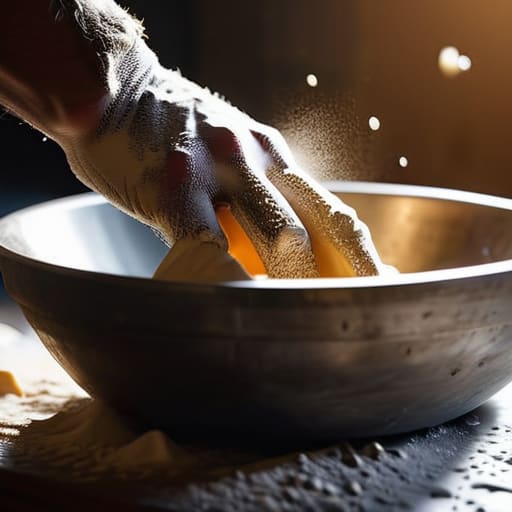
If you want to understand why that supermarket loaf feels more like a sponge than a meal, you have to look at the Chorleywood process explained in terms of sheer mechanical force. In my bakery, we worked with the dough, coaxing it through slow, rhythmic folds. In industrial bread manufacturing, they work against it. They use massive, high-speed mixers to smash the flour and water together with such violent energy that they physically force the gluten to develop in minutes rather than hours. It’s a feat of engineering, certainly, but it’s a brute-force method that bypasses the natural life of the grain.
To make up for that stolen time, they lean heavily on chemistry. Since the yeast hasn’t had the chance to develop flavor through a proper fermentation time comparison, they introduce bread improvers ingredients and various additives to mimic the structure and softness we get naturally. This is why the shelf life of commercial bread is so unnaturally long; it isn’t because the bread is “fresh,” but because it’s been chemically stabilized to resist aging. They aren’t baking bread so much as they are manufacturing a product designed to survive a supply chain.
Fermentation Time Comparison the Missing Soul of the Dough
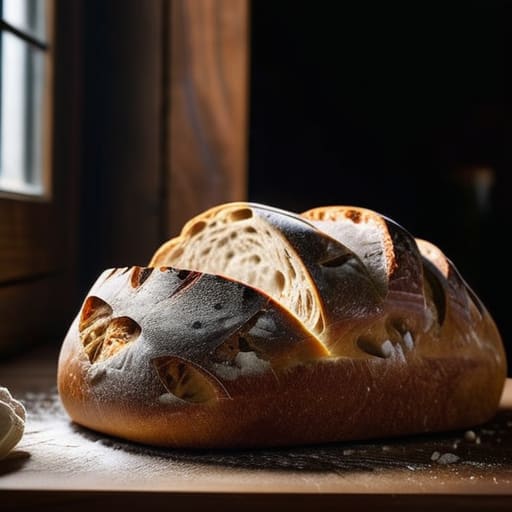
In my bakery, if I tried to rush a dough, the dough would let me know by refusing to rise or, worse, by tasting like nothing at all. When we talk about a fermentation time comparison, the gap between my kitchen and industrial bread manufacturing is measured in days, not minutes. A proper sourdough might sit for eighteen, twenty-four, or even thirty-six hours, allowing enzymes to break down the starches and develop that deep, complex tang we crave. This isn’t just about flavor; it’s about digestibility and the slow magic of wild yeast doing the heavy lifting.
The commercial side, however, treats time like an enemy to be defeated. Instead of waiting for the natural chemistry to unfold, they use a cocktail of bread improvers ingredients to force the dough to expand almost instantly. They aren’t looking for flavor; they are looking for volume and speed. When you strip away those long, slow hours of fermentation, you aren’t just losing the soul of the loaf—you’re losing the very thing that makes bread feel like food rather than just a sponge.
The Fingerprint of the Machine vs. The Hand
- Stop looking at the crumb and start looking at the ingredients; commercial bread relies on dough conditioners and emulsifiers to mimic the structure that long fermentation provides naturally. If the label looks like a chemistry textbook, it’s because they’re trying to manufacture the “lift” that time should have given you for free.
- Watch the hydration. Commercial doughs are often kept at a much lower hydration level—think 55% to 60%—because it is easier for high-speed machines to manipulate a stiff, predictable mass than a supple, living dough. When you bake at home, you want that 75% or 80% hydration that makes the dough feel alive and slightly tacky, even if it’s harder to handle.
- Listen to the yeast. In a factory, they use massive quantities of commercial yeast to force a rise in under two hours, which results in a bread that tastes of nothing but grain and air. Real bread relies on a slow, controlled fermentation where the wild microbes actually break down the starches, creating that complex, slightly acidic tang you can’t buy in a plastic bag.
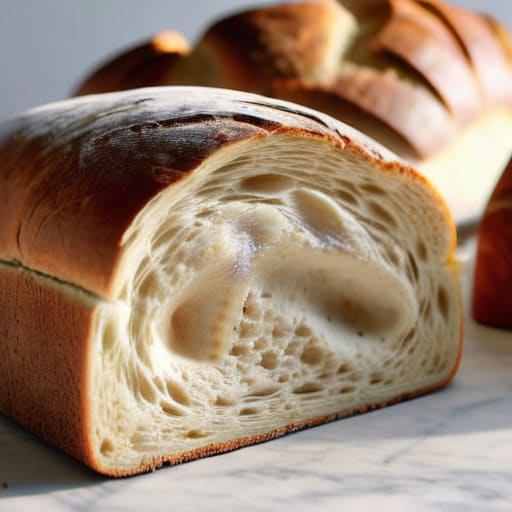
- Feel the texture of the crust. A machine-made loaf has a crust that is uniform, thin, and often strangely soft because it was baked in a steam-controlled environment designed for shelf-life, not flavor. A real, slow-fermented loaf should have a crust that tells a story—thick, varied, and crackly, a direct result of the sugars caramelizing slowly during a proper bake.
- Respect the temperature. Commercial bakeries use heat to speed up chemical reactions, whereas we use temperature to manage biological ones. If your dough isn’t rising, don’t reach for more yeast; reach for a warmer spot in the kitchen. Commercial bread is a product of controlled heat; real bread is a product of controlled life.
What to Look for When You Reach for a Loaf
If the bread smells like nothing but yeast and a hint of sugar, it’s been rushed; real bread should have that deep, slightly tangy complexity that only comes from a long, slow fermentation.
Avoid anything that feels unnaturally soft or “pillowy” like a sponge; a proper loaf should have a crust with some resistance and a crumb that feels alive, not airy and empty.
Remember that texture is a result of time and temperature, not additives—if a loaf lacks structure, it’s usually because the chemistry was forced rather than the dough being allowed to find its own strength.
The Choice Between a Product and a Loaf
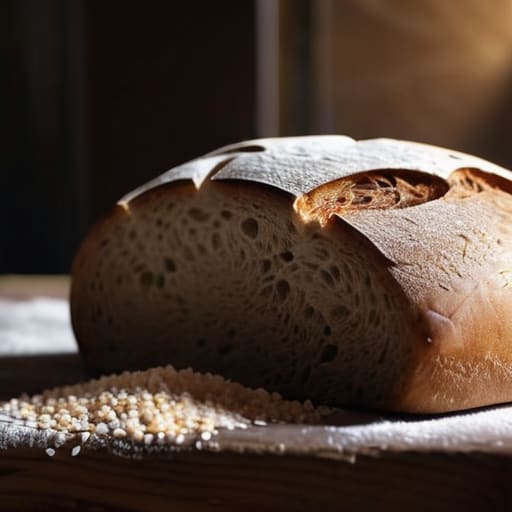
When you look at the difference between a supermarket loaf and one made with intention, you aren’t just looking at ingredients; you are looking at the presence or absence of time. We have seen how the Chorleywood process uses high-speed mechanical energy to bypass the natural rhythm of the grain, and how the lack of a long, slow fermentation strips the bread of its nutritional depth and its character. Commercial bread is a feat of engineering designed to sit on a shelf without changing, but real bread is a living thing that evolves from the moment the flour meets the water. If you want a predictable, soft sponge that tastes of nothing but air and additives, the grocery aisle is waiting for you. But if you want something with a crust that speaks of heat and a crumb that tells a story, you have to reject the shortcut.
I know it feels daunting when you see those perfectly uniform, plastic-wrapped slices and think your own kitchen is too small or too slow to compete. But remember, you aren’t trying to compete with a factory; you are trying to reconnect with the elements. There is a profound, quiet joy in feeling a dough transform under your palms, moving from a shaggy, sticky mess to something supple and alive. Don’t let the rush of the modern world make you think that quality is something you can buy in a bag. Patience is your greatest tool, and once you learn to respect the slow work of the ferment, you will never be able to go back to the hollow imitation of a commercial loaf again.
Frequently Asked Questions
If commercial bread uses so many additives to speed things up, can I still use a little bit of yeast in my own dough to get that same soft texture without losing the flavor?
You can certainly use a little yeast—it’s not a sin—but don’t mistake the additive for the technique. Commercial loaves use emulsifiers to mimic softness, but you can achieve that same pillowy crumb through higher hydration and gentle handling. If you’re running at 75% hydration, the dough will feel more like a living thing, supple and loose. Use a tiny amount of yeast for lift, but let the time do the heavy lifting for the flavor.
I’ve noticed some supermarket loaves have a much longer shelf life than mine; is that just the preservatives, or am I missing something about how I'm storing my bread?
It’s a bit of both, dear, but mostly it’s chemistry versus biology. Those supermarket loaves are packed with emulsifiers and calcium propionate to stop mold in its tracks. My bread is alive; it’s a living ecosystem of wild yeast and bacteria. If you’re storing yours in the fridge, stop—that actually speeds up staling. Keep it in a paper bag or a linen cloth at room temperature. It won’t last a week, but it’ll actually taste like something.
Since commercial bread is often so uniform, how can I tell if my homemade loaf is actually "done" during the fermentation stage if I don't have a factory's worth of sensors?
You don’t need sensors when you have your senses. Stop looking for a specific size; dough is temperamental, not mathematical. Instead, look for aeration and feel for the tension. Give it a gentle poke—if it springs back slowly and leaves a slight indentation, it’s finding its way. Most importantly, smell it. It should transition from raw flour to a sweet, slightly tangy scent. If it smells like nothing, it’s not ready. If it smells like vinegar, you’ve rushed it.